What Do We Mean By The Term Faraday Cage?
GCSE Physics may feel like a distant memory ... Most of us vaguely remember diagrams of circuits, magnets and formulas but there’s one concept that tends to ring a bell for people ...
The Faraday cage.
You might not remember the name, but you’ll almost certainly remember the concept. No signal in a lift. Calls dropping in the basement. Full bars outside, nothing the moment you step indoors. That’s the Faraday cage effect in action.
So, what is a Faraday cage (in simple terms)?
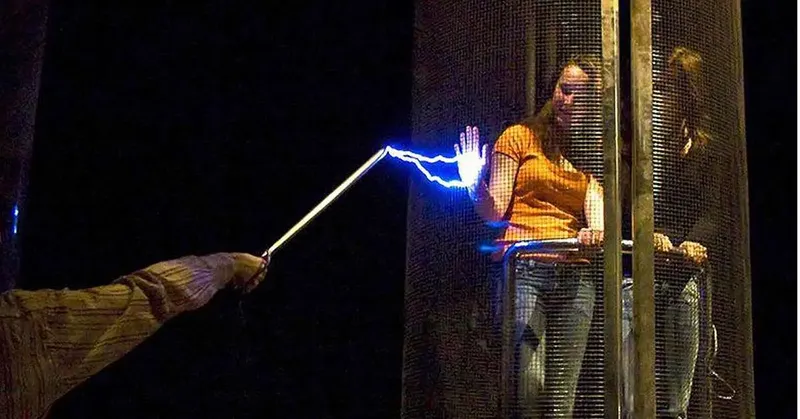
A Faraday cage is any structure that blocks or significantly weakens radio frequency signals, including mobile signal.
It works because certain materials absorb or reflect radio waves rather than letting them pass through. When enough of those materials are used together, they form a barrier that mobile signal simply struggles to penetrate.
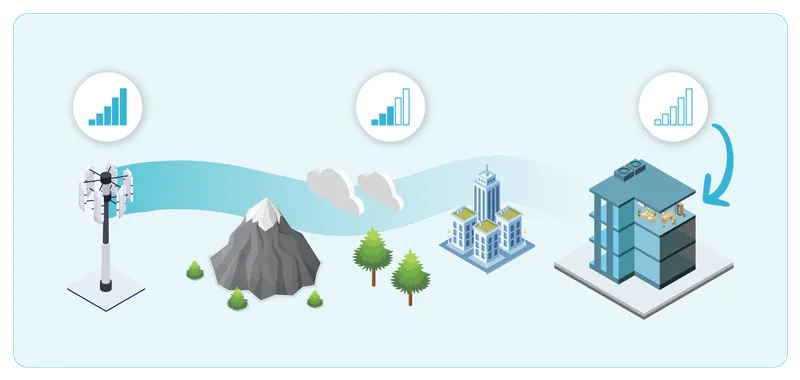
In practice, this means your phone can have excellent coverage outside a building, but once you step inside, that signal fades or disappears altogether.
Where do people encounter Faraday-like environments?
Some very common examples of a Faraday Cage include:
Basements and underground areas, where signal has to travel through large volumes of concrete and earth
Lifts, which are often fully enclosed with metal
Metal-clad warehouses and industrial units
Modern offices and commercial buildings designed for energy efficiency
Buildings with coated or Low-E glass
Older stone buildings with very thick walls
Individually, these materials cause signal loss. But combined, they can create a near-total barrier.
Why modern buildings make the problem worse
Ironically, the same features that make buildings more energy-efficient also make them harder for mobile signal to enter.
Materials commonly used in modern construction, such as reinforced concrete, steel frames, foil-backed insulation and Low-E glass are excellent at trapping heat. Unfortunately, they’re also excellent at blocking radio waves.
Even newer offices in city centres can suffer badly from this, despite being surrounded by great outdoor coverage.
The impact of the Faraday cage effect
We regularly see situations where:
Staff can’t reliably make or receive calls
Two-factor authentication texts don’t arrive
Digital check-ins and cloud systems fail
Card payment terminals lag or drop out
Emergency calls become unreliable indoors
For businesses, this quickly turns into lost productivity, frustrated staff, and a poor experience for customers or visitors.
How mobile signal boosters overcome the problem
This is where mobile signal boosters come in.
Rather than trying to force signal through the building, our Amplifi-Qx systems work by:
1. Capturing clean signal outside the building
2. Amplifying it safely and legally
3. Redistributing it indoors where it’s needed
At Signal Solutions, we handle the full process, from assessing the building and designing the system, to installation and post-installation testing. That means clients don’t have to worry about compliance, performance, or whether it will actually work in their space.
Could your building be acting like a Faraday cage?
If you notice strong signal outdoors but patchy or non-existent coverage inside, there’s a good chance the building itself is the issue.
The most effective way to resolve it isn’t waiting for the networks to improve coverage, it’s installing a properly designed mobile signal booster system that brings reliable connectivity indoors.
If this sounds familiar, it’s usually worth having the building assessed. As a first step, fill out our free solution design and quote to see what we can do for your building.