Inside Nextivity: An Exclusive Interview with CEO, Michiel Lotter
A couple of months ago, we sat down with Michiel Lotter, CEO of Nextivity, to talk about his journey in wireless communications, how the company has evolved over the years, and where in-building mobile coverage is heading next.
It was an early start for Michiel (a 6am call from San Diego!), but the conversation offered clear insight into the thinking behind one of the most trusted names in cellular signal technology, and why reliable indoor coverage is now a business-critical requirement rather than a nice-to-have.

Background & Early Career
Michiel has been with Nextivity basically since its founding, first as CTO and now as CEO. His career has always centred on wireless engineering, with cellular communications forming the foundation of both his academic and professional work.
As Michiel explained during our conversation:
“My background has always been in wireless communications, starting at university and continuing throughout my career, so working in cellular has really been a constant for me.”
That depth of experience is shared across much of the leadership team. Many of Nextivity’s core engineers have worked together for decades, across multiple businesses, all within the wireless space. According to Michiel, that continuity plays a key role in how problems are approached, with a deep, practical understanding of the underlying technology rather than surface-level fixes.
How Nextivity Began
Nextivity’s mission has always been clear: solve the problem of poor in-building cellular coverage.
The company’s earliest products focused on residential properties, guided by a simple but deliberate principle - remove complexity for the end user. The goal wasn’t just to improve signal, but to make deployment genuinely straightforward.
As Michiel described those early products:
“The idea was to make something that was genuinely easy to use: you installed it, and it just worked without needing specialist knowledge.”
As customers began using the technology in larger and more complex environments, it became clear that the same thinking could be applied to enterprise buildings. That shift eventually led to the development of the QUATRA product line.
While the technology has evolved significantly, the original philosophy remains the same. Ease of deployment, reliability and network safety are still central - now applied at the scale of offices, warehouses, hospitals and campuses.
"We’ve grown and evolved, but we’ve always tried to stay true to the original way we approached the problem.”
Inside IntelliBoost: The Technology Behind the Performance
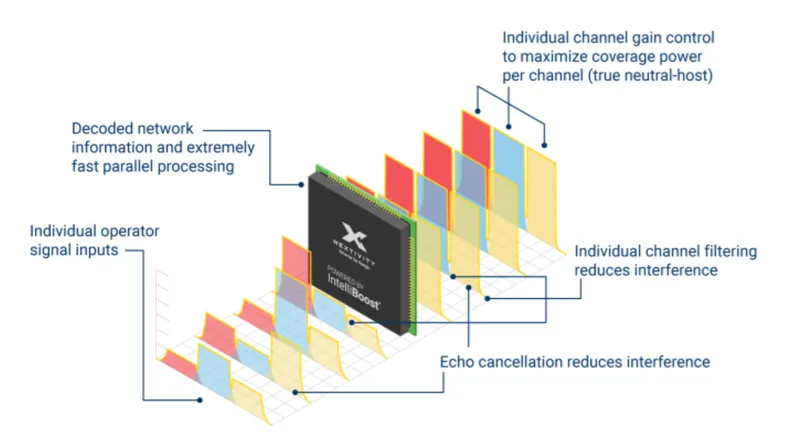
One area that truly sets Nextivity apart is its IntelliBoost chip technology.
Nextivity remains the only company in the industry to design and manufacture its own custom chipset specifically for solving in-building cellular coverage challenges. That decision was deliberate from the very beginning.
As Michiel explained:
“I’ve spent 18 years at Nextivity, and that’s the core part of the DNA of the company. Fundamentally, it allows us to do a whole lot of signal processing at a low cost that none of our competitors can really do.”
The platform is now in its fourth generation, with further development already underway. This long-term investment reflects Nextivity’s focus on foundational technology rather than short-term workarounds.
Milestones & Industry Firsts
Over the years, Nextivity has reached several milestones that Michiel is particularly proud of.
One standout moment came when a single mobile network operator deployed around 850,000 Nextivity devices across its network.
“For operators, scale matters, and deployments of that size demonstrated long-term reliability and trust in the technology.”
Earlier in the company’s journey, earning that trust wasn’t guaranteed. Signal-boosting technology was initially met with scepticism, and proving that it could be both effective and network-safe required persistence.
"We have this amazing technology that allows you to easily deploy the technology and it's always network safe. So, bringing focus from scepticism to full on embracement of the technology. Trusting the Nextivity brand, I think that has been a major achievement for us."
Today, the focus has shifted beyond coverage alone. With QUATRA and its extended capabilities, the conversation is increasingly about what reliable coverage enables for organisations.

What Are Private Networks and Why Are They Gaining Attention
Private cellular networks are becoming an increasingly common topic ... and for good reason.
In simple terms, a private network functions like a public mobile network, but on a much smaller scale. Instead of covering an entire country, it’s designed to serve a single site such as a factory, warehouse, hospital or campus.
What makes QUATRA particularly relevant is that much of the groundwork is already in place. As Michiel explained:
“When deploying the QUATRA series, you’ve already gone through the effort of finding where all the antennas need to be inside the building. QUATRA does the distribution job - you just add a radio source and a core network.”
By adding those elements, organisations can introduce private cellular coverage without redesigning the entire RF environment, making private networks far more achievable than many initially assume.
The Benefits of Private Cellular Networks
Two factors in particular are driving interest in private cellular networks.
Mobility is the first. In environments with moving assets, such as autonomous robots or handheld terminals, Wi-Fi struggles with handover between access points. Cellular networks handle mobility far more effectively, resulting in smoother and more reliable performance.
Security is the second. In sectors such as healthcare, sensitive data is better protected over cellular than Wi-Fi. For many organisations, this alone is enough to justify the shift.
“Do More With DAS”
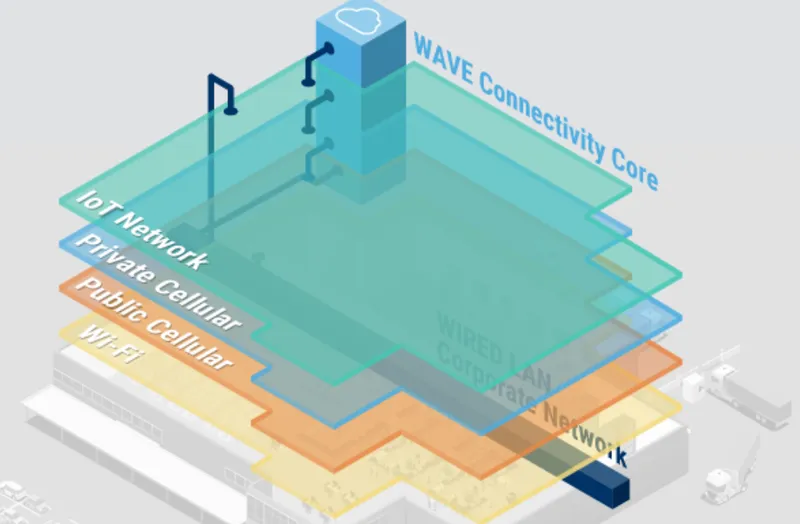
When discussing the future, Michiel spoke enthusiastically about Nextivity’s “Do More With DAS” strategy.
“Once reliable coverage is in place, it becomes a platform for far more than just voice and data.”
That platform can support sensors, IoT devices and operational systems, all running over the same infrastructure.
One example involved wireless leak detection across a large university campus. By using sensors connected through the existing QUATRA system, maintenance teams can identify issues instantly, reducing damage, costs and disruption. It also opens the door to shared budgets across departments, strengthening the business case even further.
Alongside this, Nextivity continues to invest heavily in next-generation chip technology.
"We have some exciting things that we are planning on and will change, not just the landscape of what in building coverage looks like but also we will be able to bring 5G value at a different cost point than where we are today."
Partnership with Signal Solutions
We finished the conversation by asking Michiel about Nextivity’s partnership with Signal Solutions.
From his perspective, partners play a critical role in bringing the technology to life, from system design through to installation and long-term support.
“We understand at Nextivity that we are nothing without partners like yourselves. Companies like Signal Solutions are our hands, our feet, and our access to the customer. We truly value that partnership and want to keep giving you more reasons to go and speak to end customers.”
It was a clear reminder that while technology matters, lasting results depend on collaboration, experience and shared values that sit at the heart of both organisations.